Scroll sideways for more
| Part | Indicator nymph rig | Dry-dropper |
|---|---|---|
| Leader | 9 ft, ending in 5X on tailwaters | 9 ft tapered leader |
| Tippet to top fly | 12 to 18 in of 6X on low, clear tailwaters | Dry fly tied to the leader's end |
| Gap to second fly | 12 to 14 in | 6 to 20 in, about 12 in to start, tied to the dry's hook bend |
| Second-fly tippet | Same size or one size finer | 5X fluorocarbon; 4X or 3X for heavy water, 6X for tiny nymphs |
| Weight | Split shot at the tippet knot, 12 to 18 in above the top fly, only if needed; heavy beads often need none | None: a bead-head nymph is the weight |
| Depth setting | Indicator 1.5 to 2 times the water depth up the leader | Dropper length sets the depth; up to about 5 ft in a deep pool |
| Hooks on the line | 2 (3 is Colorado's maximum) | 2 (the dry counts) |
The short answer
Indicator rig: on a 9-foot 5X leader, add 12 to 18 inches of 6X and the bigger top fly, then 12 to 14 inches more 6X and a smaller fly, pinch split shot on at that first tippet knot only if the flies need weight, and set the indicator 1.5 to 2 times the water's depth up the leader. Dry-dropper: tie a high-floating dry fly to the leader, then 6 to 20 inches (start at 12) of 5X fluorocarbon from its hook bend to a bead-head nymph. Colorado allows up to 3 common hooks on one line, so both 2-fly rigs are legal.
Which rig, where
- Indicator rig: deep, slow water and cold months. This is the tailwater rig at Deckers, Cheesman Canyon, the Dream Stream, the Blue in Silverthorne and the Fryingpan. In winter, use the midge rig page's sizes (18 to 24).
- Dry-dropper: shallow water, pocket water and creeks, and summer days when fish look up; the hopper-dropper is a summer rig. It fits Clear Creek, Bear Creek and Boulder Creek.
- Changing depth often: an indicator moves in seconds; a dry-dropper needs a new dropper tippet, and it does not follow the 1.5 times depth rule.
Set up the indicator nymph rig
- Step 1. Start with a 9-foot tapered leader. On low, clear tailwaters, use one ending in 5X.
- Step 2. Tie 12 to 18 inches of 6X tippet to the leader with a surgeon's knot (overlap about 6 inches).
- Step 3. Tie the top fly to the end with an improved clinch. It is the bigger anchor fly: Angler's Covey's late-November Deckers report leads with a small scud, red bloodworm or micro-leech. In very low, clear water, skip the anchor and fish two size 20 to 24 flies: a midge larva or pupa with a Baetis nymph behind it.
- Step 4. Tie 12 to 14 inches of tippet, the same size or one size finer, to the first fly's eye (eye to eye). Tying it to the hook bend works too.
- Step 5. Tie the smaller fly to the end: a size 20 to 24 midge, such as a Bling Midge, or a Baetis nymph such as an RS2.
- Step 6. Add weight only if the flies do not reach the bottom. Pinch split shot on at the tippet knot, 12 to 18 inches above the top fly, where the knot stops it sliding. Heavy tungsten or brass bead-heads often need no shot; unweighted midges, Baetis, eggs and worms do.
- Step 7. Set the indicator 1.5 to 2 times the water depth up the leader. In 2 feet of water, that is 3 to 4 feet; in 3 feet of water, 4.5 to 6 feet. Use the smallest indicator that floats the rig; a 1/2-inch indicator is usually all you need for trout.
- Step 8. Fish it, then adjust. If you snag bottom every drift, move the indicator 6 to 8 inches toward the flies. If the flies never touch bottom, move it the other way or add shot, one change at a time.
Measured from the top: indicator, 3 to 6 feet of leader, the tippet knot (shot here if needed), 12 to 18 inches to fly 1, 12 to 14 inches to fly 2.
Other ways you'll hear
- Heavier tippet: Orvis's general trout rig starts from a 9-foot 3X leader with 3X and 4X tippet and about 16 inches to the first fly. On low, clear tailwaters, stay with 5X and 6X.
- Fly spacing: anywhere from 4 to 20 inches, often starting at about 8, with the dropper tied to the hook bend. Spaced too far apart, the top fly stops working as an attractor.
- Split shot: 2 BB shot spread out, 1 just above the leader-to-tippet knot and 1 about 6 inches above the first fly, because a clump of shot hinges in the cast.
Set up the dry-dropper
- Step 1. On a 9-foot leader, tie on a high-floating, visible dry fly, such as a foam hopper in summer. It has to hold up the nymph.
- Step 2. Tie 6 to 20 inches of tippet to the bend of the dry fly's hook with a clinch knot. Start at about 12 inches. Use fluorocarbon, which sinks faster than nylon: 5X usually, 4X or 3X for heavy water or bigger flies, 6X for tiny nymphs.
- Step 3. Tie a bead-head nymph to the end, such as a size 16 Copper John. The bead is the weight: no split shot. You want it hanging in the middle of the water column, not dragging the bottom.
- Step 4. Match the dropper to the water. Shallow pocket water: the short end of the 6- to 20-inch range. A deep pool: a dropper of about 5 feet with a heavier nymph, which is hard to cast.
- Step 5. Watch the dry. If it dips, twitches or stops, set the hook. Trout may also take the dry itself.
How many flies are legal in Colorado?
Up to 3 hooks. Colorado's fishing regulations, 2 CCR 406-1 effective April 1, 2026, allow one personally attended line unless otherwise authorized (#103.A.1), and each line may have no more than 3 common hooks attached (#103.A.1.a). A common hook is any hook or hooks on one shank (#100.L). An indicator rig with 2 nymphs uses 2; a dry-dropper uses 2, since the dry fly counts. A third fly is the legal limit.
The tailwaters below are artificial flies and lures only, so no bait. Rules are from CPW Chapter W-1, effective April 1, 2026.
- Bear Creek, Evergreen Lake dam down to Bear Creek Reservoir (Lair o' the Bear, Morrison): artificial flies and lures only; all rainbows and cutbows released; 2 other trout (W-1 #26.a).
- Boulder Creek, upper end of Eben Fine Park down to 55th Street: artificial flies and lures only; all trout released (W-1 #52.a).
- Clear Creek through Golden and the canyon: Chapter W-1 lists no special rule for this stretch, so statewide rules apply and bait is legal. Read the signs: rules change at boundaries.
- Deckers (South Platte, lower Wigwam Club boundary to Scraggy View Picnic Ground): artificial flies and lures only; 2 trout, 16 inches minimum (W-1 #399.e).
- Cheesman Canyon (South Platte, Cheesman Dam to the upper Wigwam Club line): artificial flies and lures only; all trout released (W-1 #399.d).
- Dream Stream (South Platte, Spinney Mountain Reservoir outlet to Eleven Mile Reservoir inlet): artificial flies and lures only; all fish released; some portions may be closed as posted from Sept. 15 to Dec. 31 for kokanee spawning (W-1 #399.b).
- Blue River in Silverthorne (Dillon Dam to the north city limits): artificial flies and lures only; all trout released (W-1 #47.b).
- Fryingpan River (Ruedi Dam to the Roaring Fork, about 14 miles): artificial flies and lures only; all trout except brown trout released (W-1 #159.a).
How to fish it, the way locals do
- Find slow, deep water first in cold months: troughs, the slow tailouts of pools and seams behind rocks. That is where late-November shop reports put the fish at Cheesman Canyon and Deckers.
- Set the indicator depth for that slow, deep water using Step 7.
- Stay off spawning gravel. Brown trout redds were reported at Cheesman Canyon and Deckers in late November. Do not wade on redds or cast to fish sitting on them.
- Adjust one thing at a time: depth first, then weight, then flies.
Where this comes from
Read on November 29, 2026.
- Colorado fishing regulations, 2 CCR 406-1 (Secretary of State copy, ruleVersionId 12468, effective April 1, 2026): #100.L and #103.A.1. CPW Chapter W-1 (2 CCR 406-1), as approved November 13, 2025, effective April 1, 2026: entries #26, #47, #52, #159 and #399.
- Fly Fisherman: "3 Fly Fishing Guide Rigs" by Pat Dorsey (September 15, 2025), re-read November 29, 2026: 9-foot 5X leader plus 6X on low, clear water; larger fly first, flies 12 to 14 inches apart, eye-to-eye droppers; split shot at the tippet knot 12 to 18 inches above the point fly; two size 20 to 24 flies, midge larva or pupa trailed by a Baetis nymph, in skinny water; spacing flies too far apart weakens the attractor fly. He gives no split shot size.
- Angler's Covey, Deckers report dated November 25, 2026, re-read November 29: lead tandem nymph rigs with a small tan scud, red bloodworm or micro-leech, a midge or Baetis 12 to 16 inches back; Bling Midge 20 to 24, RS2 size 20; fish in troughs, shelves and seams; redds. Also its Cheesman Canyon report of the same date, from Seamline's conditions data.
- Orvis Learning Center: "How to set up an indicator rig", "How to set up a dry dropper rig" and "How long should you make your dropper" (Tom Rosenbauer and Orvis staff): 1.5 to 2 times depth, 1/2-inch indicator, 8-inch start and 4 to 20 inches, dropper to the bend, dry-dropper lengths, fluorocarbon sizes, size 16 Copper John. Orvis: "How Do I Nymph With an Indicator, Split Shot and Multiple Flies?" (no date shown): 3X rig, 16 inches, 2 BB shot.
- Golden Fly Shop: "4 methods for adapting to cold-weather fly fishing" (November 18, 2021): depth rule, 6- to 8-inch adjustment, when beads need no shot, summer hopper-dropper and dry-dropper rigs.
Questions anglers ask
- How deep should I set my strike indicator?
- 1.5 to 2 times the water depth up the leader. In 3 feet of water, that is 4.5 to 6 feet. If you snag bottom every drift, move it 6 to 8 inches toward the flies.
- Where do you put split shot on a nymph rig?
- On the tippet knot, 12 to 18 inches above the top fly, where the knot stops it sliding. Use it only if your flies are not reaching the bottom.
- How long should a dry dropper be?
- 6 to 20 inches; start at about 12. In a deep pool it can be several feet, but it casts poorly.
- How many flies can you fish in Colorado?
- Up to 3. Colorado's rule #103.A.1.a allows no more than 3 common hooks on a line, so 2-fly indicator rigs and dry-droppers are legal.
- What tippet for a nymph rig on Colorado tailwaters?
- A 9-foot 5X leader with 6X tippet to both flies on low, clear water. Orvis's general trout rig uses heavier 3X and 4X.
Find today's best water near Denver
Read next
Fly Fishing Cheesman Canyon
How to fly fish Cheesman Canyon on the South Platte: the hike in, best flows, flies by season, rigs for wary trout, regulations and when to go.
7 min readPhoto: denverkid, CC BY 2.0
Fly Fishing the South Platte at Deckers
Fly fishing the South Platte at Deckers: roadside access, best flows, seasonal flies, how to beat the crowds and why some days fish poorly.
7 min read
Fly Fishing the Dream Stream
Fly fishing the Dream Stream below Spinney Mountain Reservoir: lake-run browns and rainbows, the best seasons, flows, flies, wind and etiquette.
7 min read
Fly Fishing the Blue River in Silverthorne
Fly fishing the Blue River tailwater below Dillon Dam in Silverthorne: mysis shrimp, big trout, flows, access through town and winter tips.
5 min readPhoto: devriesm, CC BY-SA 2.0
Fly Fishing the Fryingpan River
Fly fishing the Fryingpan below Ruedi Dam near Basalt: mysis at the Toilet Bowl, the lower river, hatches, flows and making it a weekend trip from Denver.
6 min readPhoto: Curt Smith from Bellevue, WA, USA, CC BY 2.0
The Best Tailwaters Near Denver
The best tailwater fly fishing near Denver, from Waterton Canyon to the Fryingpan, with drive times, what each is best for and whether dogs are allowed.
2 min read
How to Read Streamflow for Fly Fishing
How to read river flows for fishing: cfs vs gauge height, picking the right gauge, USGS vs Colorado DWR stations, normal flows and what a sudden change means.
2 min read
The Winter Tailwater Fly Box
A compact winter fly box for Colorado tailwaters: midges, Baetis, attractors and mysis, plus tippet and accessories.
1 min read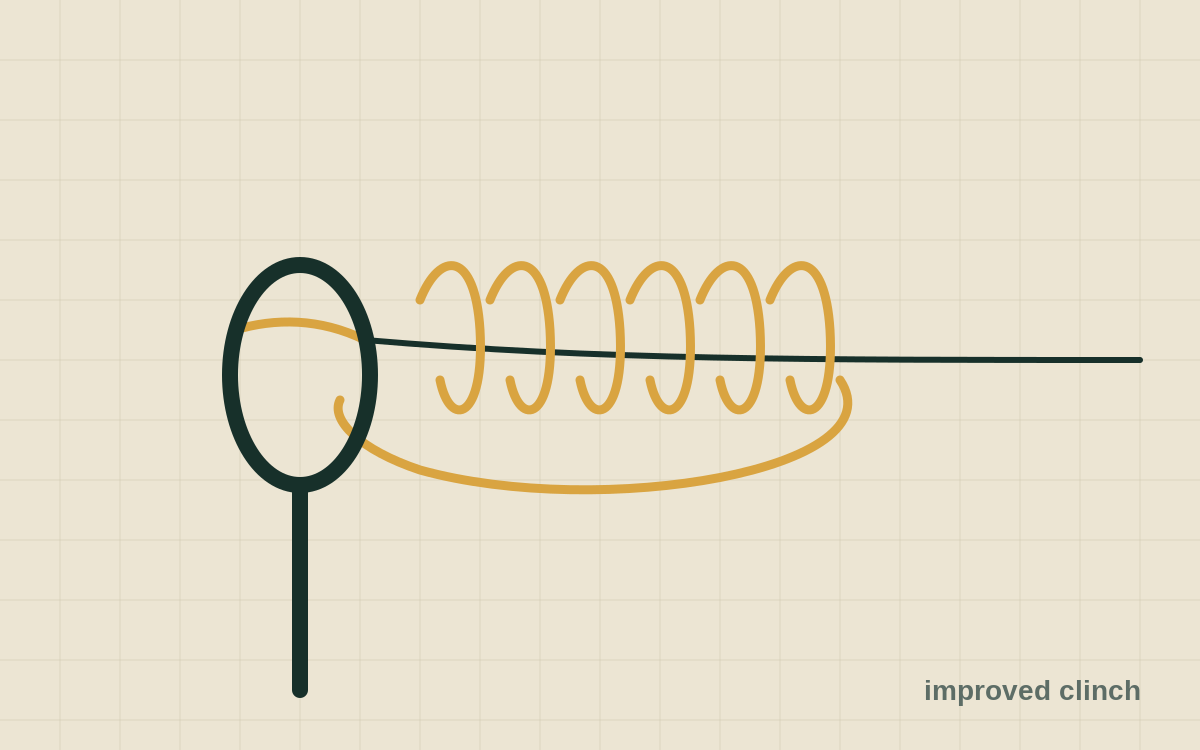
Fishing Knots: Which One, and How to Tie It
How to tie the fishing knots that cover almost everything: arbor, improved clinch, Palomar, double surgeon's, double uni and non-slip loop, plus the five fly line knots, with a drawing for every step.
12 min read
Your First Fly Fishing Setup for Colorado: What to Buy and Why
What to buy for your first fly fishing setup in Colorado: rod weight and length, reel, WF floating line, backing, leader and 5X to 7X tippet.
9 min readPhoto: Seamline
How to Set Up a Fly Rod and Reel, Step by Step
How to rig a new fly rod and reel step by step: how much backing, the knot for each connection, a 9-foot leader and tippet length, with measurements.
9 min readPhoto: Seamline
How to Fly Cast: The Overhead Cast and the Roll Cast
How to fly cast for beginners: the overhead cast and roll cast step by step, with clock positions and the pause, plus common faults and how to fix them.
8 min readPhoto: Seamline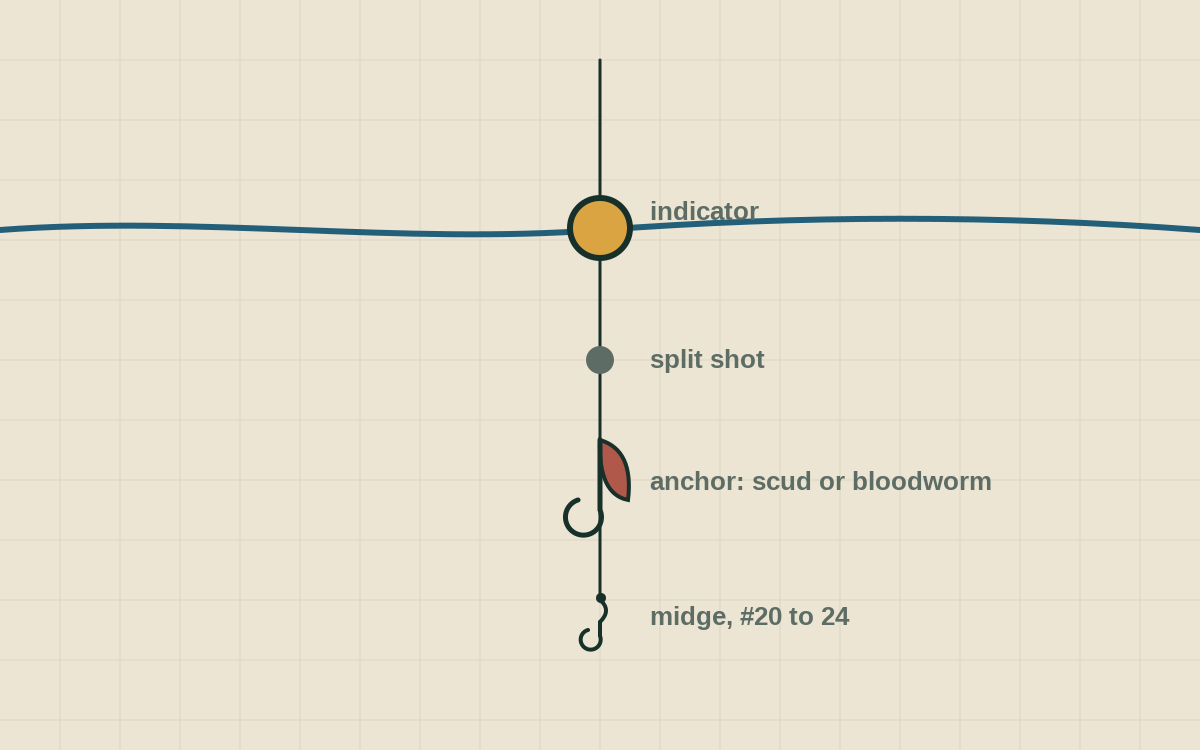
How to Rig and Fish a Winter Midge Rig on Colorado Tailwaters
How to tie and fish a two-fly winter midge rig on Colorado tailwaters near Denver: leader, tippet, fly spacing, split shot, indicator depth and the rules.
16 min read