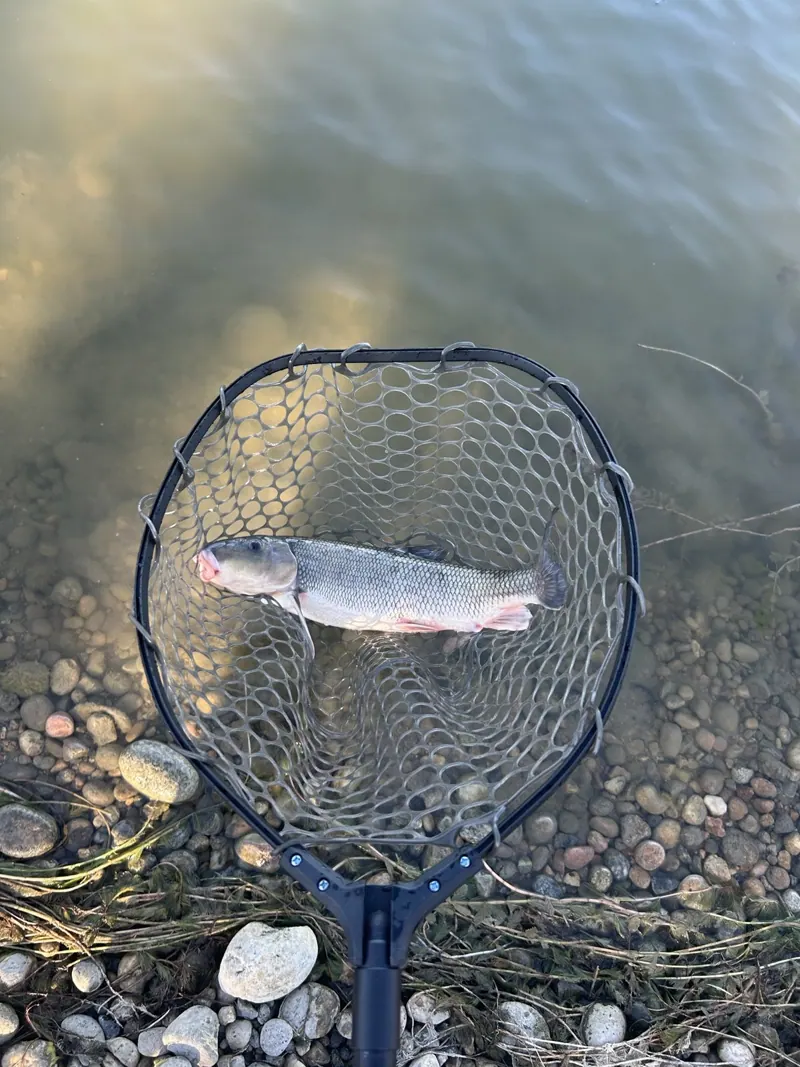
Where they are
In cold water, bass hold deep: drop-offs, rocks, and the deepest water near a dam or outlet. In a drawdown, they crowd into whatever deep pocket is left.
What to throw
- Half a nightcrawler on the bottom
- A 1/8 oz jig with a small soft plastic
- A dark bugger (#4–6) on a fly rod, crawled along the bottom
How to fish it
Let it sink all the way. Move it a few inches, then pause for five seconds. Cold bass won't chase, but they'll eat something that sits right in front of them.
The bite and the hook set
Cold-water bites are subtle: the line gets heavy or jumps sideways. Reel down and set the hook hard. Bass have hard mouths, and a soft trout-style lift won't stick them. Land them by the lower lip.
Seasonal timeline
- Late fall: bass feed before winter. Slow presentations near deep edges.
- Winter: lethargic and deep. Dead-slow bottom baits midday.
- Early spring: they move shallow on warm afternoons. This is often the best cold-water window.
- Summer: aggressive. Topwater at dawn and dusk.
Gear notes
A medium-light or medium spinning rod with 8 lb line handles most pond bass. On a fly rod, a 5–6 weight with a dark bugger works. Use 3x–4x tippet, because bass break 6x.
Catch and release
Wet your hands, support the fish's belly, and get it back quickly in cold water. Bass handle cold fights well, but keep them out of the air.
Questions anglers ask
- What line for bass?
- 8 lb monofilament on spinning gear, or 3x–4x tippet on a fly rod. Thin tippet like 6x breaks easily on bass.
Read next
Fishing Smith Reservoir in Lakewood
Fishing Smith Reservoir in Lakewood, Colorado: CPW's emergency fish salvage, species, rules, cold-water bait rigs and tips for bass and panfish.
3 min read
Bluegill and Crappie Tips
Simple bluegill and crappie tips: bait size, depth, schooling behavior and keeping fish to eat.
2 min read
Buying Your First Spinning Setup
How to buy your first spinning setup: spinning vs spincast vs baitcaster, rod length and power, reel size, line, realistic costs and what to avoid.
2 min read